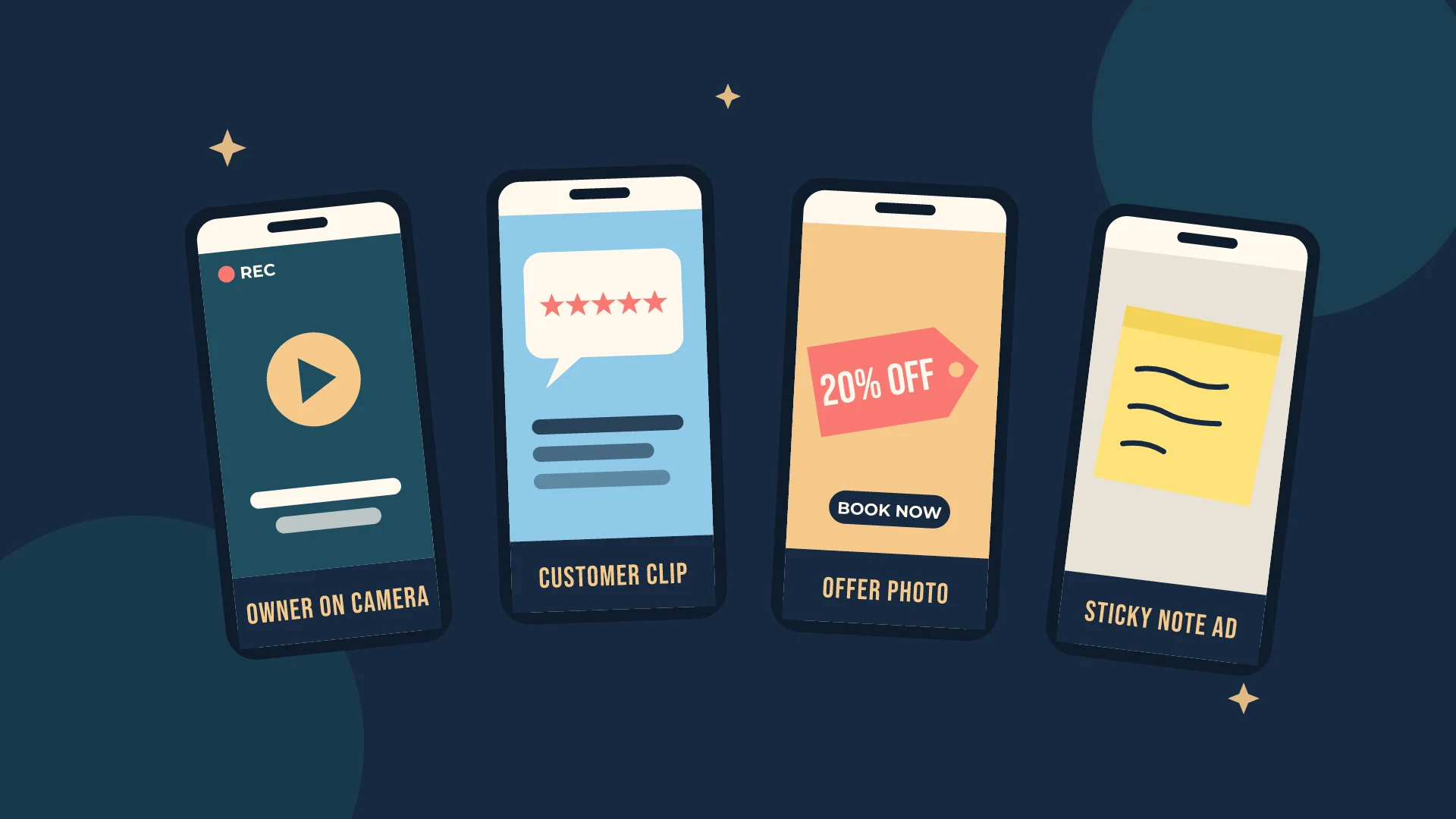
The Facebook and Instagram ads that bring in customers today are rarely the polished ones. Most of them are phone videos of the owner, customers talking into their own cameras and plain photos with a clear offer. So the most useful thing you can do for your ads is make more raw material, more often. One expensive video won't do the same job.
We run Meta ads for small businesses, and these are the patterns our ads team works from when deciding what to make.
- Video finds new customers. Photos mostly sell to people who already know you.
- A dozen rough phone clips usually beat one professional video, because each clip is another idea you can test.
- The owner on camera is the strongest asset most small businesses have, and nobody else can supply it.
- AI helps you test ideas fast, but it can't replace your face, your customers or your real work.
Why the ads you run matter more than ever
Meta's ad system now uses what's in your ad to work out who to show it to, so different ads reach different people. An account that runs the same few ads for months keeps reaching the same people, and results fade. Our post on Andromeda ads explains how that works.
Video reaches new customers, photos sell to people who already know you
In the accounts we run, photo ads (statics) mostly convert people who have already visited your site, follow you or were already shopping for what you sell. That's true even when the photo is written for strangers. They're good for offers and for people comparing options, but they rarely grow a business on their own.
Video reaches new people because Meta can measure attention. It sees who watches for 10 seconds and who scrolls past, then finds more people like the watchers. With a photo, the only signal Meta gets is a click.
So keep improving your photo ads, because they add sales from people who are already close to buying. But put most of your effort into video.
Ten rough clips beat one polished video
Cheap, quick formats win because you need many ads to find the few that work. Most ads we test don't become winners. You only find the ones that do by testing a lot, and you can't test a lot if each ad costs thousands and takes a month.
A commercial-style video gives you one test for the price of dozens. We rarely see one beat rougher content on Facebook and Instagram, with two exceptions: luxury brands, and one or two brand-story videos that run alongside everything else. If you already have polished footage, use it. Just don't start by paying for more.
Rough content has a second advantage: it looks like the posts around it, so people stop for it instead of scrolling past an obvious ad.
The ad types worth making
Each type does a different job, so run several at once instead of relying on one. For a service business, most of these need nothing more than a phone. A builder walks a framed house and explains a detail buyers never think to ask about. A dentist answers the question every new patient asks. A physio films the one exercise clients usually get wrong.
The examples below are real ads we found in the Meta Ad Library, shown to illustrate each format. They aren't our clients. You can look up any business's live ads the same way, and our guide to the Facebook Ads Library shows how.
Owner on camera
You, talking to your phone about your work or a customer question.
What it does: Introduces you, builds trust and makes offers. It's the most flexible format there is.
What you need: A phone and five minutes.
Customer video
A customer or paid creator showing the product or their result on a phone (often called UGC, user-generated content).
What it does: Reaches new people, who often trust other customers more than the business.
What you need: Happy customers willing to film, or a creator you pay.
Testimonial
A real customer saying what changed for them.
What it does: Helps people decide between you and a competitor.
What you need: A customer's words and their permission.
Demo
The product in use, or the service being done.
What it does: Answers the question every buyer has: will this work for me?
What you need: Footage of the work.

Comparison
You side by side with the usual alternative.
What it does: Wins people who are already shopping around.
What you need: Honest facts about what makes you different.
Offer
A specific price, bonus or deadline.
What it does: Gets people who are close to buying to act now.
What you need: An offer you can actually give.
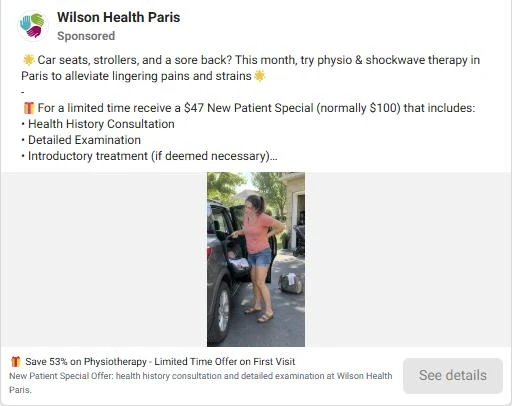
Plain photo with a story
A normal-looking photo with a longer story in the caption.
What it does: Reaches people who already know you, and tests new angles cheaply.
What you need: A real photo and a real story.
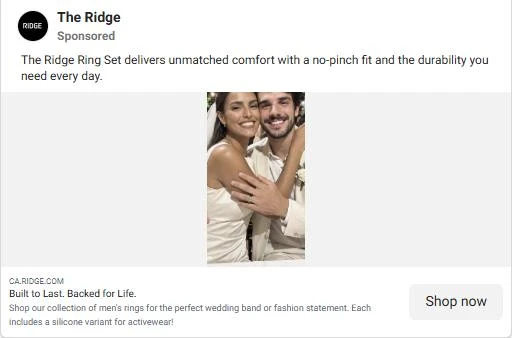
Partner ad
A creator or business you know features you, run from their account.
What it does: Puts you in front of their audience with their trust behind it.
What you need: A partner willing to lend their account.
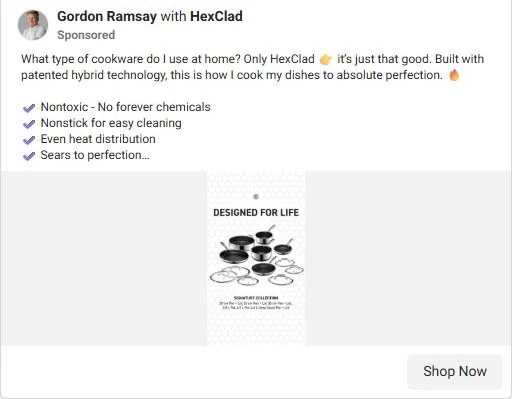
Low-effort and AI ads
Handwritten-note style images, quick text-on-screen clips, obviously AI animations.
What it does: Tests new messages in a day, before anyone films.
What you need: A design or AI tool and an hour.
Two formats depend on your industry. Interview or podcast-style clips are working in health right now. Longer videos that walk through an offer step by step mostly work for businesses selling to other businesses.
How to test without wasting money
When one message wins, try it in new formats before you change the message. The message is the reason to buy, like "fixed price, no surprises" or "booked within a week". The format is how it's delivered: owner video, customer clip, photo. So if your "booked within a week" owner video works, the next ads are that same promise as a customer clip and an offer photo. On a tight budget, this is the whole plan.
When you reuse footage, change the first few seconds every time. That opening (the hook) decides whether anyone watches the rest.
Where AI fits
Use AI to test a new message in a day, then film the winners for real. In our testing, AI ads usually perform below real footage, so treat them as a way to find what's worth filming. Keep them obviously AI, like animations and illustrated explainers, and keep every customer, testimonial and review in your ads real.
One AI trick is worth knowing. Voice tools like ElevenLabs can learn your voice from a recording, so you can narrate ads over footage without filming each one. Only use your own voice, or someone's who has agreed to it.
A simple monthly creative plan
If you do nothing else, do these every month. It's the list we'd give any owner running their own ads, and the same raw material any good agency will ask you for.
- Film yourself. A handful of short clips, each 15 to 60 seconds, on your phone. Start with the point, like the question you're answering, and talk the way you would to a customer in front of you. One take is enough. If you hate being on camera, a team member who knows the work well can do it.
- Film the work. Your product, your team, a job in progress or a finished project. Hold the phone upright, since that's how people watch on Facebook and Instagram, and keep the raw file. Thirty seconds of real work beats a cleaned-up montage.
- Ask customers to talk. Ask happy customers if they'd record a short clip or let you quote them. Use only what they actually said, with their written permission.
- Get permission for anyone on camera. Get a signed OK from staff, customers or patients before you film them. Clinics should keep patient information and anything identifying out of frame unless the patient has agreed in writing.
- Pick a real offer. A specific offer beats "quality service" every time. Decide what you can give and for how long, and test it.
- Keep a list of questions and objections. Every question a customer asks you is a possible ad.
- Add captions. Many people watch with the sound off, so put the key words on screen.
- Replace what isn't working. Expect most new ads to be switched off within a few weeks. That's how you find the few worth putting more budget behind.
If you work with an agency
Your agency can write, edit and test, but it can't film you, your customers or your work. A good one will turn your raw clips into finished ads, write the openings and captions, make the photo, offer and AI versions, and tell you which messages and formats are winning so you know what to film next. If yours is only asking for one big video shoot a year, ask why.
If you'd like a second opinion on the ads you're running now, send us a note and I'll tell you which of these types you're missing.